
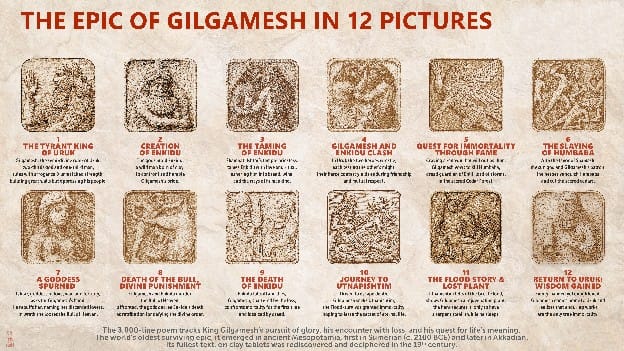
The Epic of Gilgamesh is widely regarded as the oldest surviving epic poem in world literature. Originating in ancient Mesopotamia more than 4,000 years ago, it narrates the adventures of Gilgamesh, the king of Uruk, and his search for meaning in a world governed by mortality. Tablet XI occupies a crucial position within the epic because it contains the famous Flood Narrative and presents the culmination of Gilgamesh’s quest for immortality. Following the death of his beloved companion Enkidu, Gilgamesh becomes obsessed with overcoming death. His search eventually leads him to Utnapishtim, the only mortal granted eternal life by the gods. Tablet XI narrates the conversation between these two figures and presents one of the most profound reflections on life, death, and human destiny in ancient literature.
Gilgamesh Meets Utnapishtim
The tablet begins with Gilgamesh finally reaching the distant dwelling place of Utnapishtim. Having travelled across dangerous mountains, deserts, and the Waters of Death, Gilgamesh expects to encounter a divine being. Instead, he finds an old man who appears remarkably ordinary. Surprised by this discovery, he asks how Utnapishtim attained immortality and became a member of the divine community. This question forms the basis of the narrative that follows. Utnapishtim agrees to reveal a secret known only to the gods and begins recounting the story of the Great Flood.
The Divine Decision to Destroy Humanity
Utnapishtim explains that long ago the gods met in council and decided to destroy humanity through a catastrophic flood. The ancient city of Shuruppak, situated on the banks of the Euphrates, was chosen as the site of this destruction. Among the gods participating in the decision were Anu, Enlil, Ninurta, Ennugi, and Ea. Although the decision was made collectively, Ea secretly opposed it. Recognising the injustice of total destruction, he warned Utnapishtim by speaking through the reed walls of his house. Ea instructed him to abandon his possessions, build a massive boat, and prevent the extinction of living creatures. The emphasis on preserving life demonstrates Ea’s compassion and wisdom, in contrast to the destructive intentions of the other gods.
Construction of the Ark
Following the divine instructions, Utnapishtim begins constructing the enormous vessel. The people of the city unknowingly assist him, bringing timber, pitch, asphalt, and other materials. Utnapishtim carefully follows Ea’s specifications regarding the boat’s dimensions and structure. He waterproofs it with bitumen and fills it with food, valuables, family members, workers, and representatives of all living species. The description of the construction process reveals both the scale of the undertaking and Utnapishtim’s complete obedience to divine instruction. The boat becomes a symbol of survival and hope amid impending destruction.
The Coming of the Flood
Once the boat is completed, the signs of disaster begin to appear. Dark clouds gather across the sky, and the storm god Adad unleashes devastating winds and rain. The flood overwhelms the earth with unimaginable violence. Rivers overflow, dikes burst, and darkness engulfs the world. The destruction becomes so terrifying that even the gods who initiated it are overcome with fear. They retreat to the highest heavens and tremble at the consequences of their own actions. The goddess Ishtar expresses profound regret for humanity’s destruction and mourns those who have perished. For six days and six nights the storm rages without interruption, reducing civilisation to chaos and silence.
Survival and the Search for Land
When the flood finally subsides on the seventh day, Utnapishtim opens the boat’s hatch. What he sees fills him with grief. The world has become a lifeless wasteland, and humanity has been reduced to clay. The boat eventually comes to rest upon Mount Nisir. To determine whether the waters have receded, Utnapishtim releases a series of birds. A dove and a swallow return because they cannot find dry land. A raven, however, discovers a place to settle and does not return. This indicates that the floodwaters have retreated and that life may begin anew.
Divine Reconciliation
After leaving the boat, Utnapishtim offers sacrifices to the gods. Drawn by the aroma of the offerings, the gods gather around the altar. A debate then ensues over the morality of the flood. Ea criticises Enlil for punishing all humanity for the wrongdoing of a few individuals. He argues that justice requires proportionate punishment rather than universal destruction. Eventually Enlil recognises the validity of Ea’s argument. He blesses Utnapishtim and his wife, granting them immortality and assigning them a dwelling place at the source of all rivers. This transformation makes them unique among human beings.
Gilgamesh’s Failure
After completing the story, Utnapishtim challenges Gilgamesh to remain awake for six days and seven nights. This test symbolises the challenge of overcoming death itself. Gilgamesh fails almost immediately. As proof of his failure, Utnapishtim’s wife bakes a loaf of bread each day while he sleeps. When Gilgamesh awakens, the loaves’ varying conditions demonstrate how much time has passed. This episode forces him to confront the reality that even sleep, the lesser cousin of death, cannot be conquered.
The Plant of Rejuvenation
Moved by pity, Utnapishtim reveals one final secret. He tells Gilgamesh about a magical plant capable of restoring youth. Gilgamesh dives into the abyss and successfully retrieves it. He intends to share its benefits with the elders of Uruk before using it himself. However, while resting beside a spring, a serpent steals the plant and escapes. As it departs, it sheds its skin, symbolising renewal and rebirth. Gilgamesh loses his final opportunity to escape the effects of ageing.
Return to Uruk
The tablet concludes with Gilgamesh’s return to Uruk. Instead of lamenting endlessly over his failure, he points proudly to the city’s walls, temples, orchards, and architectural achievements. He finally understands that human immortality does not lie in eternal life but in lasting achievements. Through civilisation, culture, and memory, human beings can leave a legacy that survives long after death. This realisation marks the completion of Gilgamesh’s spiritual journey.