
Graphic narratives — comprising comics, graphic novels, and visual storytelling forms — are deeply embedded in the social, cultural, and historical contexts in which they are created. They reflect and respond to social change, political movements, cultural identities, and global trends. Unlike traditional literature, graphic narratives use visual and textual storytelling to convey complex ideas, making them a powerful medium for representation, critique, and cultural preservation.
Graphic narratives are not just entertainment; they serve as cultural artefacts that document social realities, challenge stereotypes, and give voice to marginalised communities. They address issues such as war, migration, gender, caste, racism, colonialism, and national identity, making them an essential part of both popular and serious literary traditions.
Social Contexts
Representation of Marginalised Voices
Graphic narratives have historically provided a platform for marginalised communities to express their stories. Unlike mainstream literature, which elite and privileged voices have often dominated, graphic narratives allow personal, grassroots, and alternative perspectives to be heard.
For instance:
- Art Spiegelman’s Maus (1980-91) gives voice to Holocaust survivors by presenting history through a visual metaphor where Jews are depicted as mice and Nazis as cats.
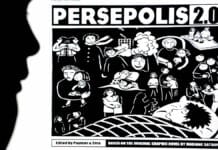
- Marjane Satrapi’s Persepolis (2000) tells a personal and political story of growing up during the Iranian Revolution, highlighting themes of war, exile, and feminism.
- Joe Sacco’s Palestine (1993-95) and Footnotes in Gaza (2009) use the form of journalistic comics to document the Palestinian-Israeli conflict, offering a perspective often missing in mainstream media.
In India, graphic novels like:
- Orijit Sen’s River of Stories (1994) narrate the struggles of indigenous communities against environmental destruction, particularly in the context of the Narmada Dam Project.
- Amruta Patil’s Kari (2008) brings queer and feminist perspectives into the Indian graphic novel landscape.
These works challenge hegemonic narratives and dominant ideologies, ensuring that diverse voices are included in public discourse.
Political and Historical Critique
Graphic narratives have been used as a form of resistance and political critique, often challenging totalitarian regimes, war, censorship, and state violence.
- Alan Moore’s V for Vendetta (1982-89) critiques fascist governments, political oppression, and surveillance societies, inspiring real-world political movements such as Anonymous.
- Frank Miller’s The Dark Knight Returns (1986) explores themes of authoritarianism and state control, reflecting the fears of the Cold War era.
- Vishwajyoti Ghosh’s Delhi Calm (2010) examines the impact of Indira Gandhi’s Emergency (1975-77) on Indian democracy, using satire and visual metaphor to critique political authoritarianism.
Many graphic narratives also serve as historical documents, providing personal insights into conflicts such as World War II, the Vietnam War, and Partition.
For example:
- Priya Kuriyan’s A Gardener in the Wasteland (2011) explores caste oppression in India, based on the writings of Jotirao Phule.
- Shaheen Bagh Comics (2020) documented the anti-CAA protests in India, using digital comics as a form of protest art.
These examples show how graphic narratives intervene in political discourse and challenge dominant histories through counter-narratives and alternative perspectives.
Gender and Feminist Perspectives
Feminist and gender-based graphic narratives have played a crucial role in deconstructing patriarchal norms, gender roles, and sexuality.
- Alison Bechdel’s Fun Home (2006) is an autobiographical exploration of queer identity, family relationships, and societal expectations.
- Emma’s A Woman’s Work is Never Done (2018) presents a visual history of feminism and women’s labour rights.
In India:
- Amruta Patil’s Adi Parva (2012) and Sauptik (2016) reimagine the Mahabharata from a feminist and ecological perspective, challenging traditional male-centric narratives.
- Nina Paley’s Sita Sings the Blues (2008), although an animated film, functions as a graphic retelling of the Ramayana, critiquing gender norms and cultural expectations.
These works provide a visual and narrative space for feminist discourses, making gender struggles more accessible and visible to a broader audience.
Urbanisation, Migration, and Globalisation
Graphic narratives frequently explore themes of urban life, migration, displacement, and globalisation, reflecting the rapid transformations in contemporary society.
- Shaun Tan’s The Arrival (2006) is a wordless graphic novel that portrays the experience of an immigrant in a strange and alienating world, symbolising the universal struggles of migration.
- Sarnath Banerjee’s Corridor (2004) and The Barn Owl’s Wondrous Capers (2007) explore urban alienation, middle-class intellectualism, and the shifting cultural landscape of Indian cities.
- Joe Sacco’s Immigrants, Refugees & Asylum Seekers (2019) provides a journalistic perspective on global migration crises.
These graphic narratives serve as visual ethnographies, capturing the everyday struggles of modernity, displacement, and identity crises.
Cultural Contexts
Mythology, Folklore, and Traditional Storytelling
Graphic narratives frequently reinterpret mythology and folklore to reflect contemporary issues. In India, mythology has always played a significant role in storytelling, and graphic narratives reimagine ancient texts for modern readers.
- Amar Chitra Katha (1967-present) has been instrumental in adapting the Ramayana, Mahabharata, and Puranas into accessible comics.
- Campfire Graphic Novels retell classic literature and historical events in a visual format.
- Rangarajan’s Bhimayana (2011), based on the life of Dr B R Ambedkar, employs a distinct folk art style (Gond art) to narrate the struggles of Dalits in India.
These works blend the oral, visual, and written traditions, ensuring that cultural narratives remain dynamic and accessible.
Postcolonial Identity and Hybridity
Many graphic narratives critique colonial history and explore the postcolonial condition.
- Gene Luen Yang’s American Born Chinese (2006) explores diasporic identity and cultural assimilation.
- Willow Wilson’s Ms Marvel (2014) presents a Pakistani-American superhero dealing with cultural hybridity.
- Appupen’s Halahala series (2009-present) creates a dystopian mythology that blends indigenous storytelling with postmodern themes.
Such works reflect the hybrid nature of cultural identities in a globalised world, addressing issues of race, belonging, and cultural memory.
Influence of Digital and Global Media
The digital revolution has reshaped the landscape of graphic narratives, allowing for new forms such as webcomics, interactive comics, and digital storytelling.
- Platforms like Webtoon, Tapas, and ComiXology have made graphic narratives more accessible.
- Indian webcomics such as Sanitary Panels by Rachita Taneja use humour to discuss politics, feminism, and social justice.
- Instagram comics like Adarsh Balak satirise Indian social norms and stereotypes.
These digital platforms provide a space for independent creators to explore cultural and social issues without the constraints of traditional publishing.
Graphic narratives are deeply rooted in social and cultural contexts, reflecting and shaping political movements, gender discourses, historical memory, and postcolonial identities. They serve as tools for resistance, education, and representation, making them a vital part of contemporary global literature.
As technology, politics, and society evolve, so too will graphic narratives, continuing to bridge the gap between tradition and modernity, text and image, personal and political.