Graphic narratives rely on a set of distinct visual and structural principles that differentiate them from conventional forms of storytelling. The effectiveness of this medium depends not merely on the presence of images and text, but on how these elements are organised, interpreted, and experienced by the reader. Concepts such as sequential art, closure, graphic weight, speech and thought balloons, and page layout form the core mechanisms through which meaning is constructed in graphic narratives. Sequential art establishes the flow of events through ordered images, while closure requires the reader to connect these images into a coherent narrative actively. Graphic weight directs attention within each panel, shaping emphasis and interpretation, whereas speech and thought balloons integrate language into the visual field, revealing both dialogue and inner consciousness. Finally, layout and other visual elements determine pacing, mood, and narrative rhythm. Together, these components create a complex, interactive system in which storytelling emerges through the dynamic interplay of visual design and reader engagement.
Sequential Art and Its Significance
Sequential art refers to the arrangement of images in a specific order to create a narrative. Each panel represents a moment in time, and when placed together, they form a continuous story. The meaning emerges not from individual images alone but from their sequence and relationship.
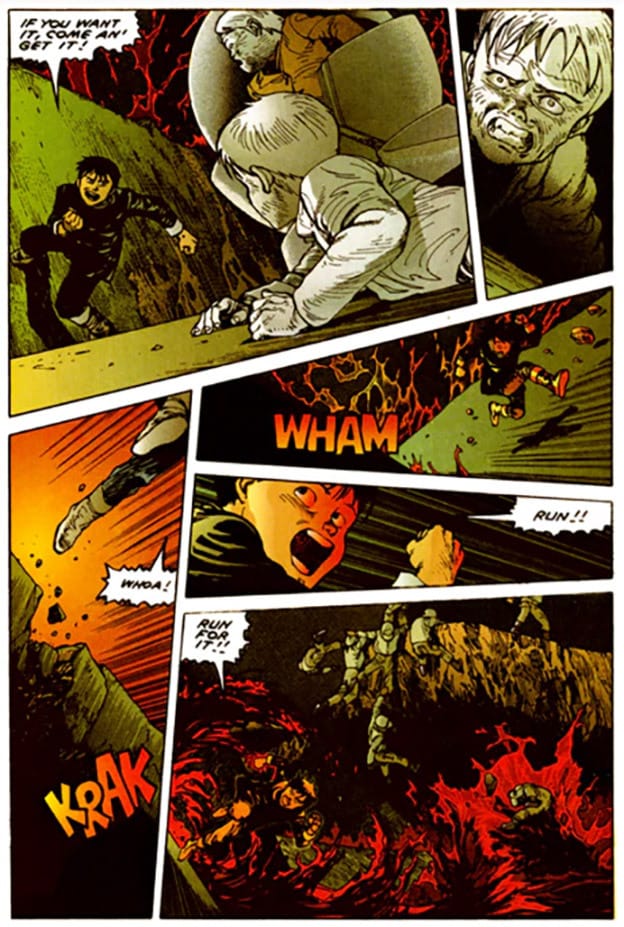
For example, if one panel shows a person raising a hand and the next shows the person striking, the reader connects the two to understand the action. In Maus, sequences move between past and present, allowing memory and history to unfold visually.
Sequential art is significant because it transforms static images into a dynamic narrative, enabling readers to construct movement, time, and continuity through visual progression.
Closure in Comics and Its Effect on Storytelling
Closure is the process through which readers mentally fill the gaps between panels to create a continuous story. Since not every action is shown, the reader must infer what happens in the space between images.

For instance, one panel may show a raised fist, and the next may show someone fallen. The action itself is not depicted; the reader infers it. In Persepolis, many transitions rely on closure, especially when depicting moments of violence or emotional change.
Closure enhances storytelling by making the reader an active participant, allowing imagination to complete the narrative and creating emotional and interpretive depth.
Concept of Graphic Weight in Visual Storytelling
Graphic weight refers to the visual importance given to certain elements in a panel. It determines where the reader’s attention is drawn and how meaning is prioritised.
Elements such as size, contrast, positioning, and line thickness contribute to graphic weight. A large, dark figure placed centrally will dominate attention, while smaller or lighter elements may recede into the background. In Watchmen, strong contrasts and framing techniques guide the reader’s focus to key thematic elements.
Graphic weight is significant because it functions like emphasis in writing, directing attention and shaping interpretation without the need for additional explanation.
Effect of Speech Balloons and Thought Balloons
Speech balloons and thought balloons integrate text into the visual structure of graphic narratives. Speech balloons represent spoken dialogue, while thought balloons reveal a character’s inner thoughts.
The shape and style of these balloons convey tone and emotion. For example, jagged balloons indicate shouting, while soft, cloud-like thought balloons suggest internal reflection. In Tintin, speech balloons drive the narrative forward, while thought balloons provide insight into the character’s reasoning.
These elements enhance storytelling by combining verbal and visual communication, allowing readers to access both external actions and internal states simultaneously.
Layout and Visual Elements in Enhancing Storytelling
The layout of a graphic narrative refers to how panels, images, and text are arranged on the page. It plays a crucial role in controlling pacing, guiding the reader’s eye, and shaping the overall experience.
Regular grid layouts create order and stability, while irregular layouts suggest chaos or emotional intensity. Full-page images emphasise key moments and slow down reading. Visual elements such as colour, framing, and perspective further enhance meaning. In The Dark Knight Returns, fragmented layouts and dramatic contrasts reflect tension and psychological conflict.
Layout transforms the page into a narrative space where visual design and storytelling are inseparable.
Graphic narratives rely on a combination of visual and textual techniques to create meaning. Sequential art, closure, graphic weight, speech devices, and layout work together to produce a storytelling form that is interactive and visually rich. These elements engage the reader actively, making interpretation central to the reading process and expanding the possibilities of narrative expression.