


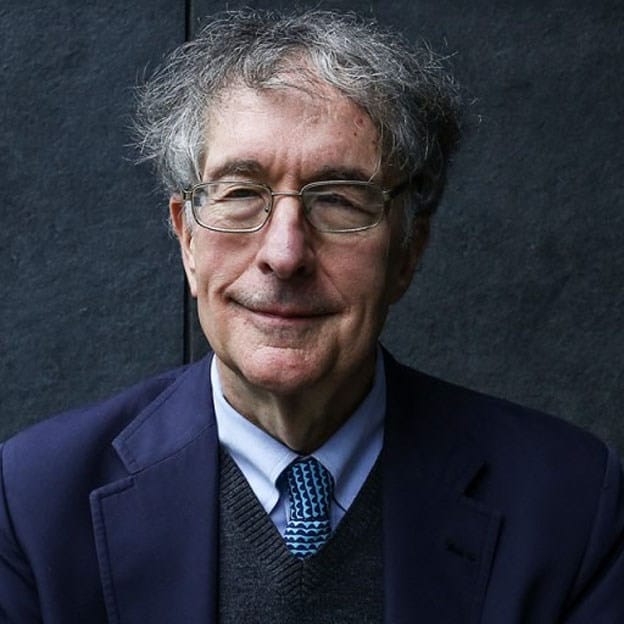
The Multiple Intelligences (MI) Theory was developed by Howard Gardner in 1983 as part of his book Frames of Mind: The Theory of Multiple Intelligences. He challenged the traditional IQ-based view of intelligence, arguing that intelligence is not a single general ability but consists of multiple distinct intelligences that people use differently.
Key Principles of Multiple Intelligences Theory
- Intelligence is not a single entity – People learn and express knowledge differently.
- Each person has a unique combination of intelligence – No one is “good” or “bad” at learning; they just learn differently.
- Education should cater to different intelligences – A one-size-fits-all teaching approach does not work.
- Intelligence can be developed – While people may have natural strengths, they can also improve in other areas.
- Real-world application is important – Intelligence should be measured in practical, meaningful contexts.
Gardner’s Eight Multiple Intelligences
Gardner originally proposed seven intelligences, later adding an eighth. Some researchers suggest more, but these eight remain the most widely accepted.
| Intelligence | Description | Characteristics | Example Careers |
|---|---|---|---|
| Linguistic | Strong ability to use words, both spoken and written | Enjoys reading, writing, storytelling, debating | Writers, journalists, lawyers, poets |
| Logical-Mathematical | Skilled in reasoning, numbers, problem-solving | Good at puzzles, coding, analysing patterns | Scientists, mathematicians, engineers |
| Spatial | Thinks in images, good at visualising concepts | Likes drawing, designing, mapping | Architects, graphic designers, artists |
| Bodily-Kinaesthetic | Learns through movement and hands-on activities | Enjoys sports, acting, crafts | Athletes, dancers, surgeons |
| Musical | Sensitivity to sounds, rhythms, and melodies | Enjoys music, singing, composing | Musicians, composers, sound engineers |
| Interpersonal | Good at understanding and interacting with others | Empathetic, good at communication, team-oriented | Teachers, counsellors, managers |
| Intrapersonal | Deep self-awareness, ability to understand one’s own emotions and goals | Enjoys self-reflection, journaling, philosophy | Psychologists, philosophers, monks |
| Naturalistic | Strong connection to nature, recognises patterns in the environment | Enjoys animals, gardening, conservation | Biologists, farmers, environmentalists |
Every person has a unique mix of these intelligences. Schools traditionally focus on linguistic and logical-mathematical intelligence, but other types of intelligence are equally important for success in life.
Applications of Multiple Intelligences in Education
Gardner’s theory has significant implications for teaching, learning, and curriculum design.
Teaching Methods for Different Intelligences
A varied teaching approach helps students learn in ways that suit their intelligence strengths.
| Intelligence | Effective Teaching Strategies |
|---|---|
| Linguistic | Storytelling, debates, reading assignments, creative writing |
| Logical-Mathematical | Problem-solving, experiments, logical puzzles, coding |
| Spatial | Diagrams, mind maps, visual storytelling, design projects |
| Bodily-Kinaesthetic | Role-playing, hands-on activities, movement-based learning |
| Musical | Songs, rhythm-based memorisation, composing music |
| Interpersonal | Group discussions, peer teaching, teamwork |
| Intrapersonal | Reflection journals, independent projects, personal goal setting |
| Naturalistic | Outdoor learning, nature-based projects, environmental studies |
A diverse classroom requires multiple approaches to engage all learners effectively.
Differentiated Instruction
Instead of using one rigid teaching method, teachers can adapt lessons to suit different learners:
- Offer multiple ways to demonstrate understanding (e.g., writing an essay, making a presentation, creating a diagram).
- Use varied activities (e.g., group projects for interpersonal learners, hands-on experiments for kinaesthetic learners).
- Allow students to choose learning methods that fit their strengths.
Assessment Based on Strengths
Traditional tests often favour linguistic and logical learners. Instead, alternative assessments can include:
-
- Portfolios (E.g., artwork, writing samples)
- Presentations (E.g., storytelling, role-playing)
- Practical demonstrations (E.g., experiments, performances)
- Peer collaboration (E.g., group problem-solving)
Assessment should reflect real-world abilities, not just standardised tests.

Multiple Intelligences and Real-Life Applications
Gardner’s theory extends beyond education and applies to career choices, workplace training, and personal development.
Career Guidance
-
- People with musical intelligence thrive in music-related fields.
- Those with logical intelligence excel in problem-solving jobs.
- Interpersonal learners make great teachers, therapists, and managers.
Workplace Training
-
- Businesses use MI theory for employee training (e.g., hands-on workshops for kinaesthetic learners and team discussions for interpersonal learners).
- Leadership development focuses on different intelligences (e.g., self-awareness for intrapersonal intelligence, strategic thinking for logical intelligence).
Personal Growth
-
- Recognising one’s strong and weak intelligence helps in self-improvement.
- People can develop underutilised intelligence (e.g., a writer improving spatial intelligence through visual storytelling).
Criticism of Multiple Intelligences Theory
Despite its popularity, the MI theory has faced criticism:
-
- Lack of Empirical Evidence – Some researchers argue that there is not enough scientific proof to support distinct intelligences.
- Overlap with Learning Styles – Critics suggest that MI is similar to learning styles but lacks a strong neurological basis.
- Not a True ‘Intelligence’ Theory – Some claim MI describes talents or skills rather than actual intelligence.
- Difficult to Measure – Unlike IQ, multiple intelligences are hard to quantify, making it difficult to assess learning effectiveness.
Despite these criticisms, MI theory remains widely used in education and training because it respects diverse learning approaches and acknowledges human potential beyond traditional intelligence testing.
Howard Gardner’s Multiple Intelligences Theory revolutionised education by challenging the traditional idea of intelligence and promoting a more inclusive view of learning. By recognising that people learn differently, educators and workplaces can create environments that cater to multiple strengths, ultimately improving learning outcomes and personal development.


